Furnace Repair Nationwide
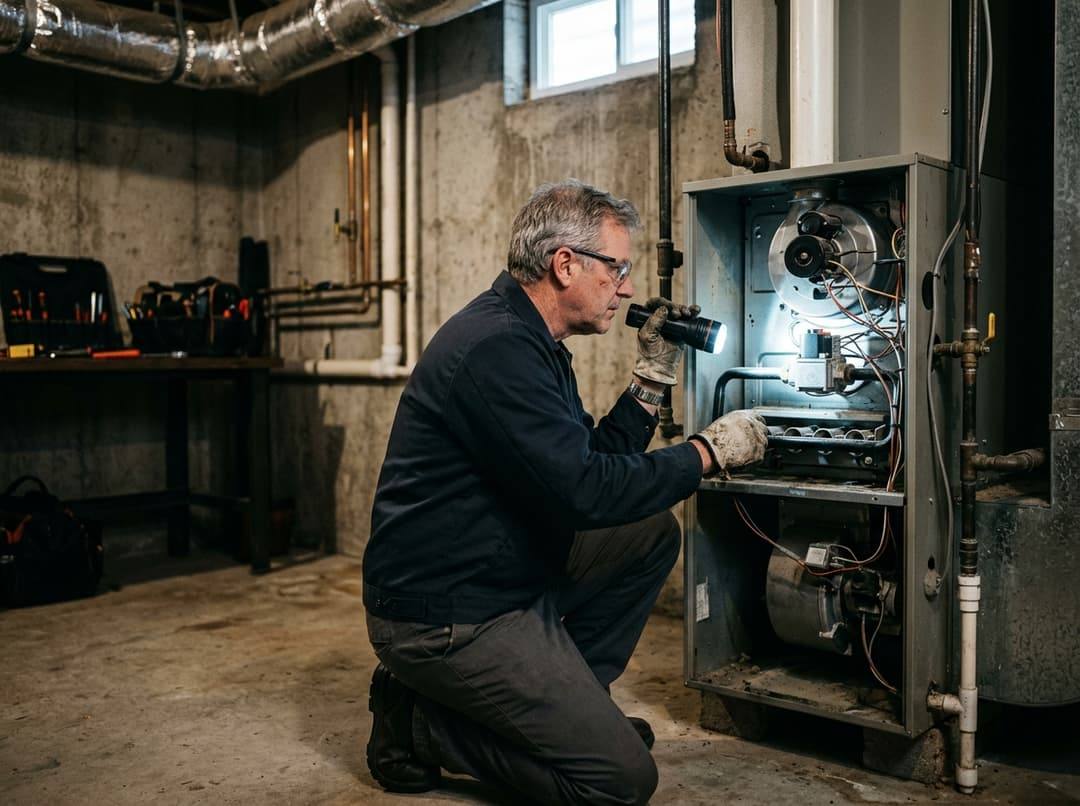
No heat on a cold morning, a furnace that starts and stops, or a burner that will not light all point to a heating fault that should be found quickly. Furnace repair checks ignition, sensors, airflow, and safety controls in order, so the cause is identified before parts are replaced.
Furnace repair suits any furnace that has stopped heating, that cycles too often, that makes a new noise, or that leaves rooms cold even when it runs.
How Furnace Repair Works
- Check the furnace repair thermostat, filter, power, and gas or electric supply before opening the furnace.
- Test ignition, flame sensor, blower, and safety controls during furnace repair to find the part that matches the fault.
- Replace only the failed furnace repair part, then test the furnace through a full heating cycle.
- Confirm furnace repair by checking vent temperature, airflow, and room temperature, and confirm safety controls shut the unit down correctly if needed.
Furnace Repair Questions
Why will my furnace not start?
A furnace repair no-start fault can be caused by thermostat, power, ignition, or sensor problems, and each is tested in order before a part is replaced.
Is a furnace that cycles on and off dangerous?
A furnace repair cycling fault is not automatically dangerous, but safety controls must be tested, because a furnace that cycles too often can overheat parts.
Can I restart a furnace myself after it stops?
A furnace repair restart is safe only if the thermostat and power are the cause, and a furnace that smells of gas or has tripped safety controls should be left off and checked.
Related Services
Furnace Installation
Heat Pump Repair
Boiler Repair
HVAC Repair
Service Areas
Furnace Repair is offered across the 51 state hubs below. City pages for Furnace Repair follow in Batch 2 with the same unique-content standard for that service.
Alabama
Alaska
Arizona
Arkansas
California
Colorado
Connecticut
Delaware
District of Columbia
Florida
Georgia
Hawaii